
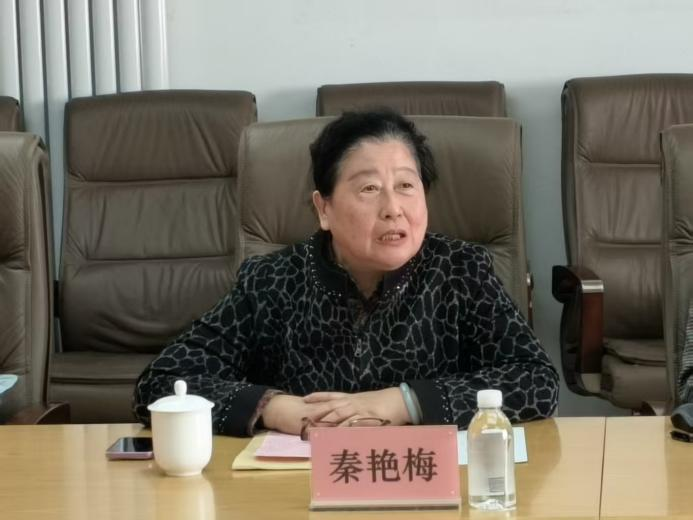
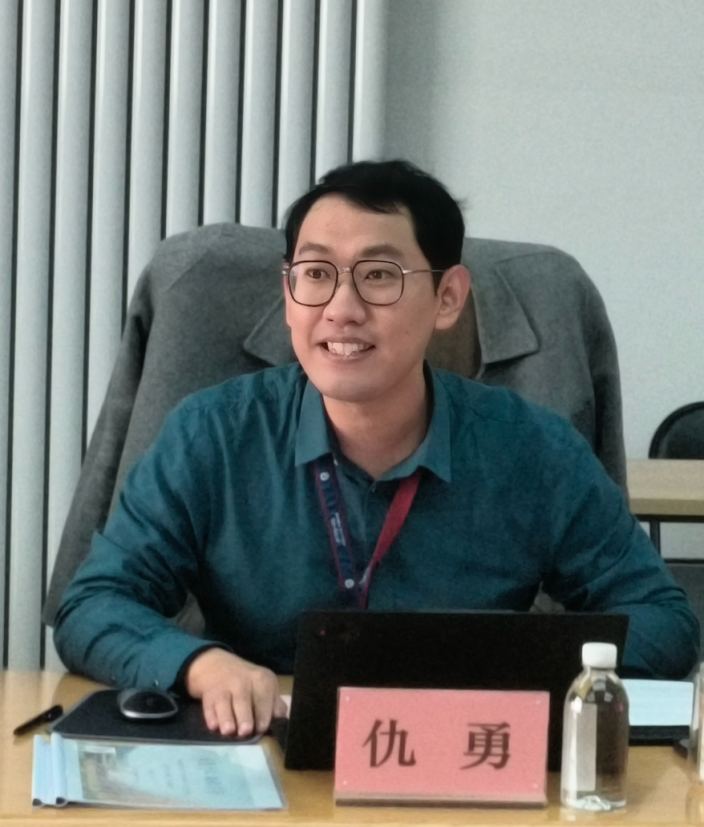
To further implement the national initiative on deepening educational and teaching reforms, the Business School held the establishment ceremony of its Curriculum-based Ideological and Political Education Teaching Research Center, followed by the Digital Business Curriculum-based Ideological and Political Education Teaching Seminar, on December 1st in Room 319 of the Business School Building at the Liangxiang Main Campus. The event was attended by distinguished guests including Professor Hua Ying from the University of International Business and Economics, a nationally recognized master teacher in curriculum-based ideological and political education; Professor Wang Luran, Dean of the Academic Affairs Office; and Professor Zhao Chunli, Dean of the School of Marxism, who provided expert guidance. Also present were Party Secretary Fan Jiangtao, Associate Dean Qiu Yong, Professor Qin Yanmei, Chair of the Business School’s Teaching Advisory Committee, and faculty representatives from the Business School, all of whom participated in the academic discussions. The ceremony was chaired by Associate Dean Qiu Yong.
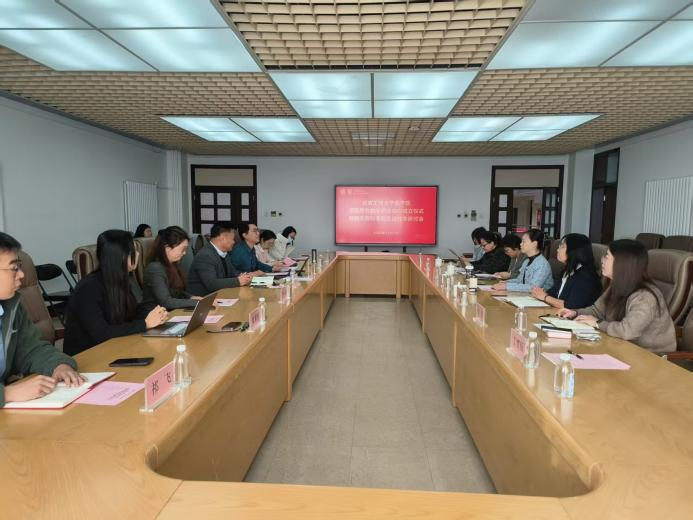
In his keynote address, Fan Jiangtao, Party Secretary of the Business School, emphasized that curriculum-based ideological and political education constitutes an integrated educational framework encompassing all participants, processes, and dimensions of teaching and learning. Beijing Technology and Business University, as an institution with a profound revolutionary heritage, has long been committed to cultivating high-caliber business and management professionals who serve national development and the economic advancement of Beijing. In the face of new challenges posed by the digital economy era, the Business School must not only impart disciplinary knowledge and managerial competencies but also instill entrepreneurial spirit and nurture future management leaders with patriotism, global vision, and a strong sense of social responsibility. Secretary Fan underscored that the newly established Curriculum-based Ideological and Political Education Teaching Research Center should focus on developing high-quality courses, generating exemplary and scalable outcomes, and actively collaborating with enterprises to co-develop curricular resources. The Center should strive to build a distinctive and recognizable brand for ideological and political education in business disciplines, ensuring that every course is both intellectually engaging and value-driven.

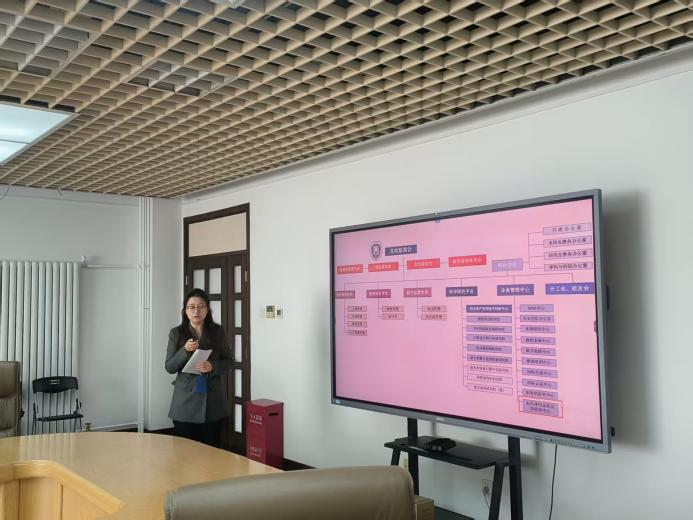
Ma Ke, Director of the Ideological and Political Teaching Research Center at Beijing Technology and Business University, delivered a presentation outlining the center’s strategic positioning and development roadmap. She highlighted that the center will advance toward four strategic goals—systematization, resource integration, outcome generation, and brand building—with the vision of establishing a distinctive digital business curriculum-based ideological and political education ecosystem reflective of Beijing Technology and Business University’s institutional identity.
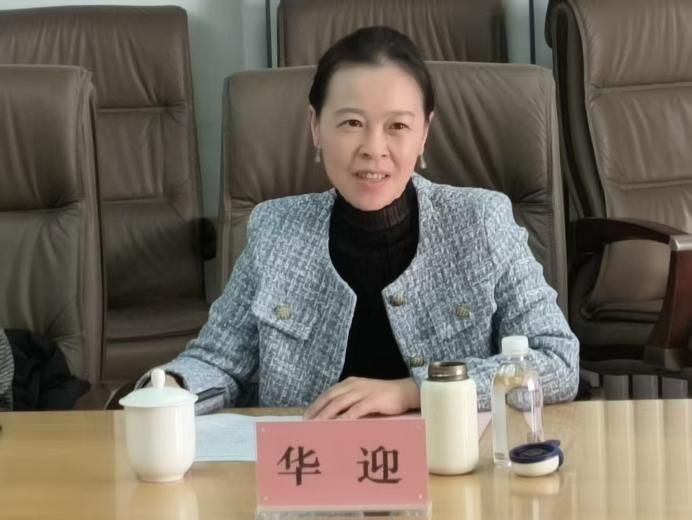
Professor Hua Ying from the University of International Business and Economics, a nationally recognized master teacher in curriculum-based ideological and political education, highly commended the Business School for establishing its Teaching Research Center on Ideological and Political Education. She emphasized that this initiative represents a substantive step forward in fulfilling the fundamental mission of fostering virtue through education. In the digital era, transformations in business models have exerted dual pressures on corporate profitability and business ethics, thereby underscoring the critical importance of values-based education. Professor Hua recommended that the School develop a systematic case repository for curriculum-based ideological and political education, promote the uploading and sharing of instructional examples, and integrate ideological and political elements into classroom teaching through carefully designed pedagogical strategies aligned with students’ interests.
Professor Wang Luran, Director of the Academic Affairs Office at Beijing Technology and Business University, extended congratulations on behalf of the office for the establishment of the Curriculum-based Ideological and Political Education Teaching Research Center. She emphasized that curriculum-based ideological and political education is a strategic initiative to advance the integration of business disciplines and comprehensively deepen pedagogical reform. With its solid foundation and disciplinary strengths, the Business School is well positioned to embed ideological and political education throughout the entire talent development process, fostering high-caliber professionals who embody patriotism, business ethics, and a strong sense of social responsibility. The Academic Affairs Office has established a supportive framework encompassing policy guidance, resource allocation, and incentive mechanisms, and is committed to fully supporting the center in developing high-quality, impactful courses—those that are warm in humanistic concern, deep in academic rigor, and strong in educational effectiveness. Professor Wang encouraged the School to position the Center as a think tank for teaching innovation and a platform for faculty professional development, cultivating a team that combines disciplinary expertise with tangible scholarly outcomes, thereby continuously contributing to the advancement of the university’s integrated business education strategy.

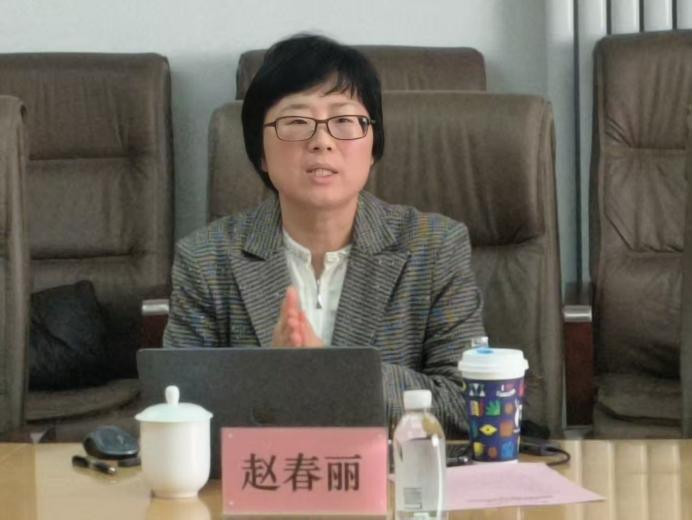
Professor Zhao Chunli, Dean of the School of Marxism at Beijing Technology and Business University, expressed the vision to integrate institutional resources and harness artificial intelligence to establish a centralized demonstration platform for curriculum-based ideological and political education. She proposed the development of a dual-instructor teaching model, in which ideological and political educators collaborate with subject-specific faculty to co-deliver courses, as well as the joint organization of teaching competitions that integrate business disciplines with general ideological education. These initiatives aim to strengthen interdisciplinary collaboration and advance the effective implementation of curriculum-based ideological and political education across academic programs.
Deputy Dean Qiu Yong delivered the closing remarks and outlined the key priorities for the next phase, emphasizing that the School will concentrate on four strategic pillars: curriculum development, textbook construction, pedagogical research publications, and teaching methodology innovation. Regarding curriculum development, the School will prioritize professional courses as a breakthrough point to address the current challenge of underperformance in ideological and political education course competitions. In textbook development, building upon the previously published case collections, the School will accelerate the release of high-quality, specialized textbooks centered on digital business disciplines. For pedagogical research, faculty members will be organized to produce and publish scholarly outputs that reflect their teaching innovations and educational research findings. With respect to teaching methodology reform, the School will leverage the Academic Affairs Office’s intelligent classroom observation platform to advance the deep integration of digital technologies with ideological and political education in curricula.
Following the establishment ceremony, Professor Hua Ying from the University of International Business and Economics delivered a keynote lecture titled "Values Education in Digital-Enabled Business Innovation." She began by outlining the core requirements for curriculum-based ideological and political education and the evolving role of values cultivation in the digital era. Taking the course "Online Marketing" as a case study, she introduced a structured "element matrix" for integrating ideological and political components into disciplinary teaching. This framework spans key themes—from patriotism and national identity to strategic national initiatives such as the digital economy and dual circulation—illustrated through vivid examples including the innovation of China's e-commerce models and the resurgence of domestic brands. These cases effectively link professional knowledge with national confidence and social responsibility. Professor Hua emphasized the importance of first conducting a precise analysis of students’ cognitive structures and interests, then designing student-centered instruction that seamlessly embeds ideological elements into classroom practice. Through this approach, value formation, knowledge transmission, and competence development can achieve synergistic alignment. The lecture was well received by participating faculty members and sparked active and insightful discussions.
The successful convening of this seminar marks a significant milestone in the Business School’s curriculum-based ideological and political education, signaling its advancement into a new phase characterized by systematization, platform integration, and brand development. Building on the newly established Research Center and with strong institutional support from the university, the School will continue to explore innovative pathways for value guidance in the context of digital business education. It aims to cultivate a portfolio of distinctive, high-quality ideological and political education outcomes that reflect the “BTBU identity,” thereby contributing meaningfully to the mission of nurturing socialist builders and successors who embody both moral integrity and professional excellence.