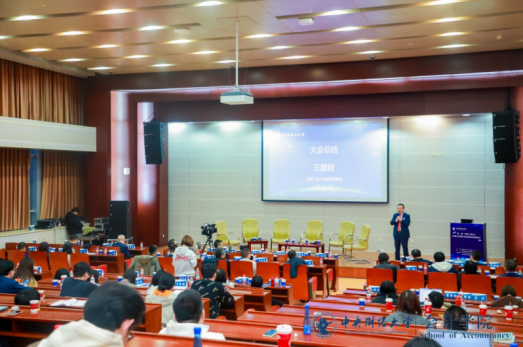
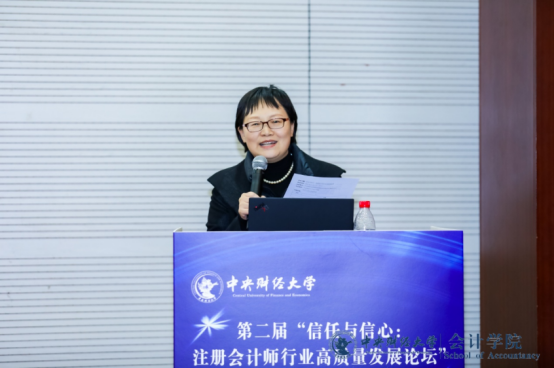
On November 1, the second “Trust and Confidence: High-Quality Development Forum for the Certified Public Accountants Industry,” co-organized by the School of Accounting at Central University of Finance and Economics and the Business School at Beijing Technology and Business University, was successfully held in Beijing. The forum convened distinguished participants—including representatives from government agencies, accounting firms, enterprises, and academic institutions—to deliberate on strategies and policy recommendations aimed at advancing the high-quality development of the certified public accountants profession. With a focus on shaping the industry’s trajectory during the upcoming 15th Five-Year Plan period, the event underscored the importance of reinforcing trust and confidence as foundational elements for sustainable progress. Organizers emphasized that this high-level platform for dialogue and collaboration will serve to support innovation and long-term development within China’s certified public accountants sector.
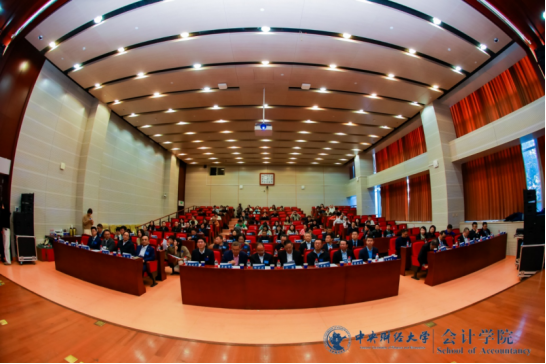
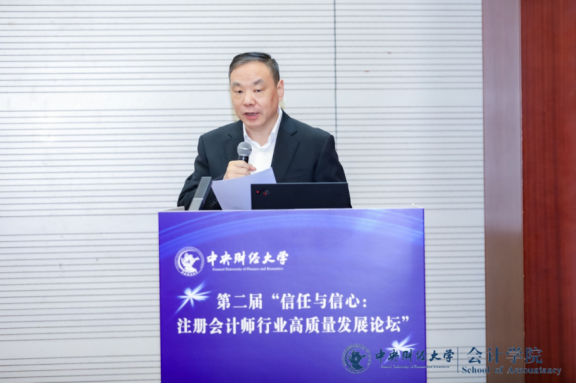
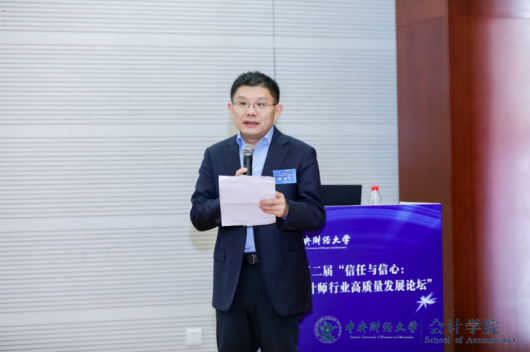
The opening ceremony of the forum was chaired by Professor Wang Pengcheng from the Business School at Beijing Technology and Business University. In his keynote address, Jiang Yong, Party Secretary and Secretary-General of the Chinese Institute of Certified Public Accountants (CICPA), highlighted that the certified public accountant profession has achieved significant, leap-forward progress over the past 45 years—particularly in the new era—under the leadership of the Communist Party of China. He emphasized that the industry has centered on the core values of upholding integrity, assuming responsibility, contributing expertise to national development, and embracing a global perspective. He further highlighted that five key principles of success have been distilled: upholding Party leadership, improving the legal and regulatory framework, aligning with national strategic priorities, safeguarding professional integrity and quality, and strengthening talent development. At this pivotal juncture marking the conclusion of the 14th Five-Year Plan and the outset of the 15th Five-Year Plan, the Institute will continue to advance institutional standardization, operational branding, digital transformation, and international integration, thereby promoting the high-quality development of accounting firms and making sustained contributions to implementing the resolutions of the Fourth Plenary Session of the 20th CPC Central Committee and advancing the modernization of China on its own terms.
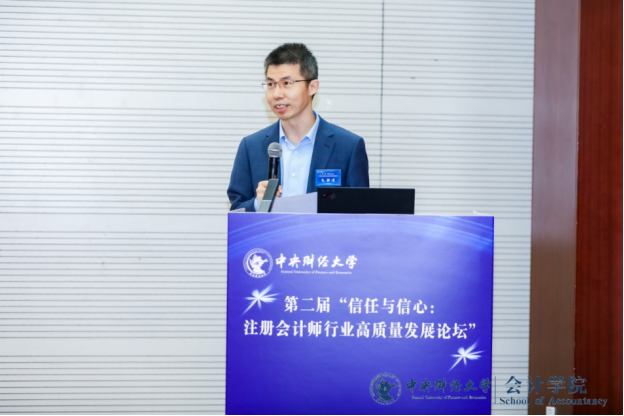
Professor Chen Binkai, Associate President of Central University of Finance and Economics, delivered an address extending a warm welcome and sincere appreciation to all attending experts and representatives. He underscored the critical role of the certified public accountant profession in upholding market economic order and safeguarding public interests. At the same time, he highlighted the challenges confronting the industry in its development trajectory and emphasized the pressing need to build broad consensus. Professor Chen expressed his aspiration that all participants would work collectively to ensure the steady and sustainable advancement of the profession in the new era.
Professor Xi Wu, Dean of the School of Accounting at the Central University of Finance and Economics, presided over the morning keynote session. At the session, Tang Jianhua, Deputy Secretary-General of the Chinese Institute of Certified Public Accountants, delivered a keynote speech entitled “Enhancing Audit Quality and Safeguarding Public Interest”. Deputy Secretary-General Tang elaborated on the mission facing the profession, emphasizing that the CPA industry serves as a key professional force within the national financial and accounting oversight system. He noted that CPA audits constitute a form of public good, and that safeguarding the public interest represents the fundamental duty and original mission of the profession. He also analyzed the main issues and underlying causes affecting audit quality in recent years, and outlined the initiatives undertaken by the CICPA to promote high-quality development, as well as future directions for its work.
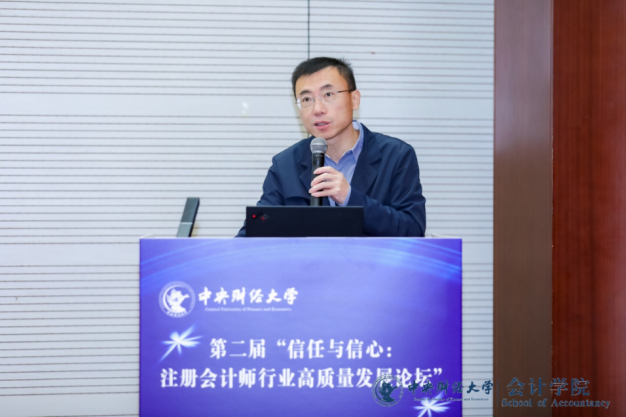
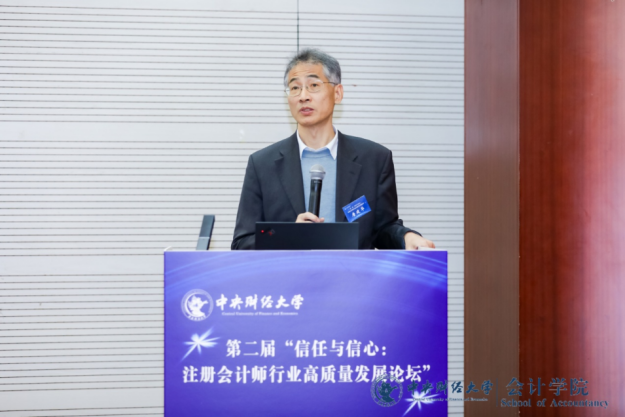
Professor Huang Shizhong of Xiamen National Accounting Institute delivered a keynote address titled “Sustainable Information Assurance – A Green Frontier for the CPA Profession”. He shared his insights on the global shift toward sustainable development, emphasizing that the imperative of green transformation has created a strategic new frontier for the accounting profession. In the context of China’s firm commitment to achieving its dual carbon goals and enhancing green competitiveness, he underscored the professional responsibility of the CPA industry to contribute meaningfully to national sustainability objectives. Given the growing prevalence of greenwashing, he highlighted that sustainable information assurance has emerged as a critical credibility mechanism essential for ensuring transparency and reliability in non-financial reporting. Professor Huang stressed that this domain represents not merely an incremental business opportunity, but a transformative pathway to transcend the saturated and highly competitive landscape of traditional audit services. He concluded by offering policy recommendations aimed at strengthening the industry’s technical capabilities, standard-setting frameworks, and talent development systems to meet the demands of this evolving field.
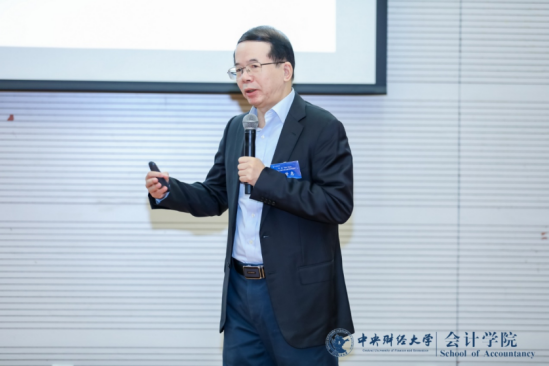
The forum also featured a roundtable discussion, during which participants actively exchanged insights and practical experiences, and offered recommendations to advance innovation and development within the industry.
Roundtable Discussion 1, titled “Strengthening Foundations and Prioritizing Quality,” was moderated by Professor He Yurun, Dean of the Business School at Beijing Technology and Business University. The session was co-hosted by Mr. Gao Jinxin, Associate President of the Chinese Institute of Certified Public Accountants (CICPA). Panelists included Mr. Wu Gangping, Chairman of the Audit Committee at China International Capital Corporation (CICC); Mr. Yang Zhiguo, Executive President of BDO China (Lixin); Mr. Zou Jun, Chairman of KPMG China; and Ms. Wu Yaoshu, Director of the Supervision Department at CICPA. Drawing on their professional expertise, the panelists shared insights into strengthening quality culture within accounting firms and enhancing audit quality through systemic and governance-oriented approaches. The discussion aimed to harness the collective wisdom of industry leaders to explore how robust quality management can serve as the cornerstone of sustainable industry development.
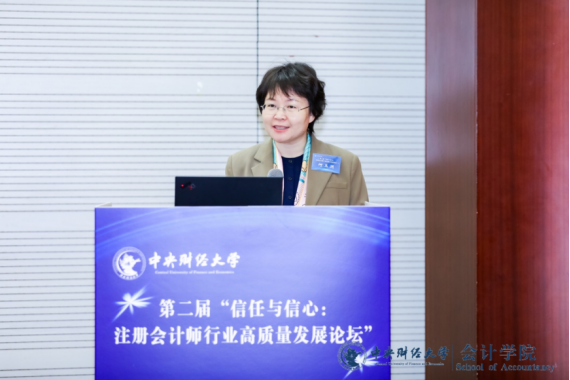
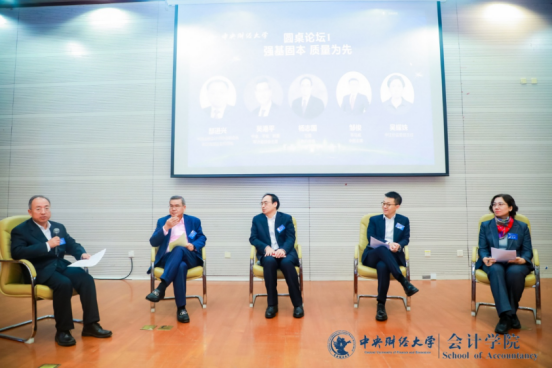
Roundtable Discussion 2, titled “The Sustainability Wave and the High-Quality Development of the Profession,” was moderated by Professor Chen Yunsen, Party Secretary of the School of Accounting at Central University of Finance and Economics. The session was co-hosted by Mr. Mao Anning, Associate President of the Chinese Institute of Certified Public Accountants (CICPA). Panelists included Professor Huang Shizhong of Xiamen National Accounting Institute, Ms. Liu Minghua, Chief Executive Officer of Deloitte China, Mr. Liu Wei, Chief Partner of Rongcheng Accounting Firm, and Mr. Zhao Jizhi, Director of the Standards Department at CICPA. The panelists engaged in an in-depth discussion on the strategic opportunities and emerging challenges presented by the global sustainability movement for the accounting profession. Drawing on their respective areas of expertise, they offered forward-looking perspectives to guide the industry’s transformation and long-term, sustainable development.
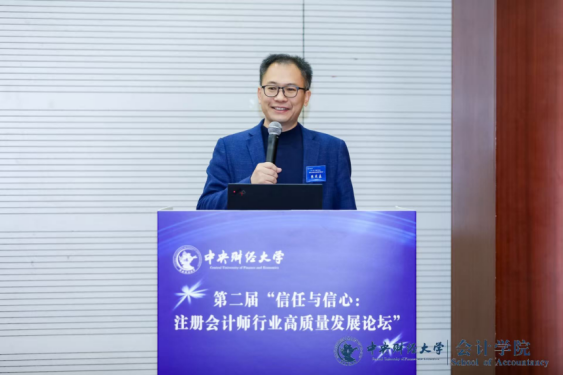
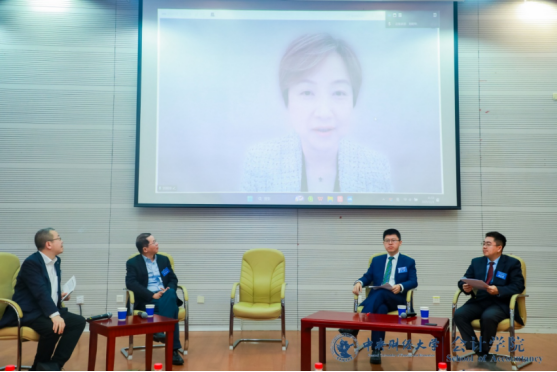
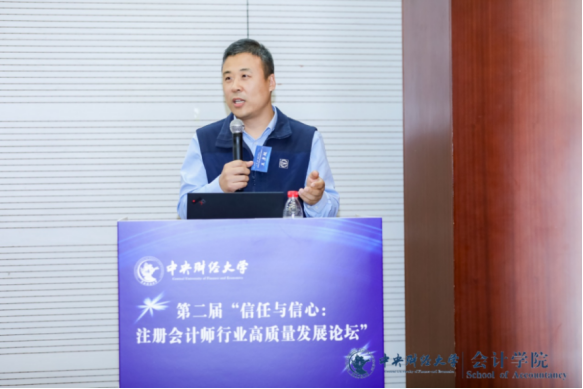
Professor Wang Yanchao, Associate Dean of the School of Accounting at Central University of Finance and Economics, moderated the keynote speech session held in the afternoon. Professor Wang Pengcheng from the Business School of Beijing Technology and Business University delivered a keynote address titled “Accounting Transformation and Audit Evolution in the Digital Age”. He began by examining the transformation of accounting in the digital era, noting that the widespread adoption of digital and intelligent technologies has not only expanded the scope and depth of accounting information, but also enriched the fundamental objectives and underlying assumptions of accounting, while fundamentally reshaping accounting processes. He then outlined the profound shifts currently taking place in audit models under the influence of digitalization—on one hand, digital tools enhance audit efficiency and analytical capabilities; on the other, the nature of audit subjects, as well as audit procedures and methodologies, are undergoing structural transformation. In conclusion, Professor Wang addressed the need for strengthening professional standards in digital auditing, advocating for increased investment by the audit profession in digital capabilities and emphasizing the critical importance of establishing an industry-wide knowledge repository to support sustainable innovation and standardization.
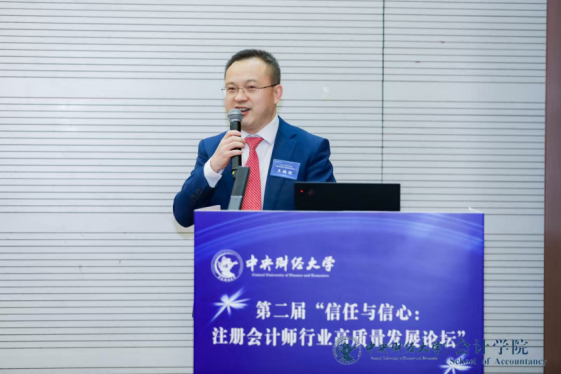
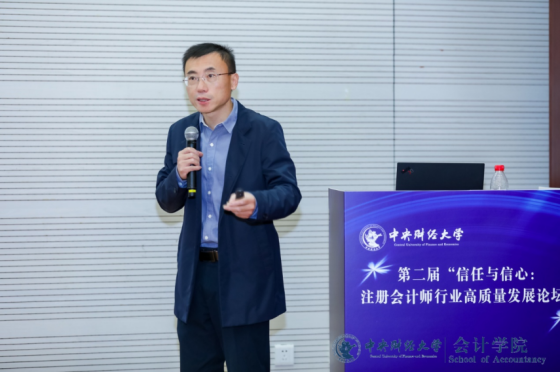
Professor Wu Xi, Dean of the School of Accounting at Central University of Finance and Economics, delivered a keynote address titled “Observations and Reflections on Talent Attractiveness in the Certified Public Accountant Profession under an Enhanced Regulatory Regime”. Professor Wu emphasized that the high-quality development of the CPA profession fundamentally depends on a robust pipeline of professional talent; however, in recent years, the industry has faced growing challenges in talent attraction. Drawing on a large-scale data analysis, he outlined current trends in career decision-making among accounting professionals and examined the evolving nature of legal liabilities borne by audit engagement personnel. He noted a significant increase in both administrative sanctions and civil litigation cases involving CPAs in recent years. Professor Wu then presented empirical findings on how legal liability influences the likelihood of audit professionals exiting the profession, revealing that exposure to civil litigation exerts a significantly stronger deterrent effect than administrative penalties. This trend is particularly pronounced among non-partner auditors and those serving high-quality clients. In conclusion, Professor Wu underscored the importance of strengthening professional liability protection mechanisms and increasing strategic investment in human capital as critical measures to mitigate talent attrition and enhance the long-term competitiveness of the profession.
Following the conclusion of the afternoon keynote session, the forum proceeded with two panel discussions on Audit Transformation in the Digital and Intelligent Era and Enhancing Talent Attractiveness in the Accounting Profession.
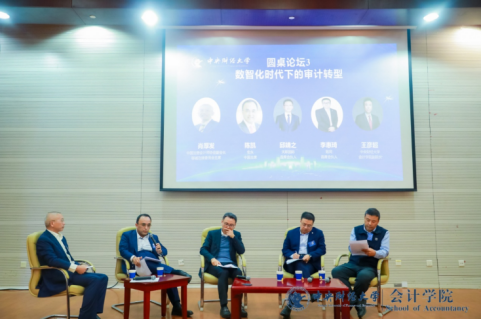
Roundtable Discussion 3, titled “Audit Transformation in the Digital and Intelligent Era,” was moderated by Professor Zhang Weihua of the Business School at Beijing Technology and Business University, and co-hosted by Mr. Xiao Houfa, Associate President of the Chinese Institute of Certified Public Accountants (CICPA). Panelists included Mr. Chen Kai, Chairman of EY Greater China; Mr. Qiu Jingzhi, Chief Partner of Tianzheng International Accounting Firm; Mr. Li Huiqi, National Managing Partner of Grant Thornton China; and Professor Wang Yanchao, Associate Dean of the School of Accounting at Central University of Finance and Economics. The discussion centered on audit transformation driven by artificial intelligence and big data. Participants shared practical insights on digital platform development, advancements in data governance and analytical capabilities, and the application of intelligent audit tools. The panel unanimously affirmed that audit digitization is a critical enabler of enhanced quality and efficiency. They emphasized the need to accelerate the construction of integrated digital ecosystems, facilitate the profession’s shift from labor-intensive to technology-empowered models, and achieve deeper integration between professional expertise and technological innovation.
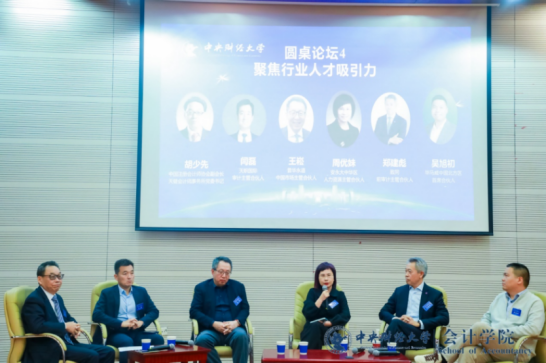
Roundtable Discussion 4, titled “Enhancing Talent Attractiveness in the Accounting Profession,” was moderated by Professor Zhao Xueyuan, Associate Dean of the School of Accounting at Central University of Finance and Economics, and co-hosted by Mr. Hu Shaoxian, Associate President of CICPA. The panel brought together leading practitioners, including Mr. Yan Lei, Audit Managing Partner at Tianzheng International; Mr. Wang Song, Market Managing Partner for China at PwC; Ms. Zhou Youmei, Human Capital Managing Partner at EY Greater China; Mr. Zheng Jianbiao, Former Audit Managing Partner at Grant Thornton China; and Mr. Wu Xuzhi, Chief Partner of KPMG North China. The discussion explored the underlying causes and current challenges contributing to declining talent appeal in the auditing profession, including perceptions of career cost-effectiveness, talent attrition amid digital transformation, and gaps in talent development frameworks. The panelists concluded that restoring industry attractiveness requires a multi-faceted strategy—optimizing career progression pathways, strengthening positive public narratives, enhancing compensation and training systems, and advancing digital upskilling initiatives—to reinforce the social recognition and long-term competitiveness of the CPA profession.
Professor Wang Pengcheng from the Business School at Beijing Technology and Business University delivered a closing summary of the conference. He reviewed the key insights shared by panelists throughout the forum, highlighting that broad consensus had been reached on critical issues facing the accounting profession. He emphasized that the sustainable development of the industry relies on the coordinated efforts of regulatory bodies, professional practice communities, and academic institutions. Professor Wang called for strengthened communication and collaboration among all stakeholders to jointly advance innovation-driven development within the certified public accountant profession in the new era, and to collectively shape a more prosperous and resilient future for the industry.